Showing posts with label entrepreneur. Show all posts

Wednesday, 19 October 2016

English and Mathematics; Pre-requisite For Entry into Higher Institutions


We are all familiar with the “five credit passes, including English and Maths” that accompany the terms & conditions of admission that must be satisfied in virtually all the tertiary institutions in the country. This has been an age long tradition whose relevance in our country today ought to be re-examined. I have a brief example to share.

I took four SS1 students private lessons on science courses and one of these students happen to be very poor in arithmetic, so poor in anything involving numbers to the extent that ‘ten’ divided by ‘two’ has proven on several occasions to be an arduous challenge for him. Let’s not discuss how he managed to even get to SS1 in the first place, but this boy is very bright in other subjects and was capable of reasoning and thinking real wide. I know that he definitely would get better in arithmetic (he already is), but what about others out there who might be facing similar challenges?

English language is merely a type of language. The fundamental essence of every language is communication. Inasmuch as one is capable of reading, writing and speaking a language, the primary objective of studying that language has been accomplished —save for those who choose to advance their knowledge in the field — and every other thing that follows is secondary.  What we study in English in our schools is quite disorienting. 


Likewise maths, research and survey have shown that several people possess an inherent ‘phobia’ for mathematics and thus find it extremely difficult to cope in an ‘arithmetic weather’. Others on the other hand are naturally endowed with the ability to effortlessly tackle mathematical problems.

For the English, since it has been adopted as our official language, I’ll say that it will do well for everyone to master its use. For mathematics however, someone who has been gifted in painting or athletics ought not to be unnecessarily punished or denied the opportunity of advancing in his/her career simply because he/she is not good in maths.

It’s high time we begin to evaluate certain norms/laws that no longer yield desired results. For one not to credit maths and English does not mean such a person has nothing to offer — I think that those who benefit from such student’s failures are the examination bodies themselves — even though these subjects are believed to be functional skills.

By now, some of our higher institutions ought to have been converted to specialized vocational schools if we truly believe that SME’s have a role to play in contributing to the nation’s GDP and help alleviate the soaring rate of unemployment.

God bless Nigeria.

Wednesday, 30 March 2016

12-Year-Old Moziah Bridges Runs A $150, 000 Business


Moziah Bridges, CEO of Mo's Bows.

In the past three years, while his classmates were doing homework and playing sports, Moziah Bridges built himself a $150,000 business.

That's right--he started his business when he was 9 years old. Not yet a teenager, Bridges now has five staff members and has received a ton of media attention, from an appearance on the TV show Shark Tank to features in O magazine and Vogue.

"I like to wear bow ties, because they make me look good and feel good," Bridges writes on his website. "Designing a colorful bow tie is just part of my vision to make the world a fun and happier place."

Ever the fashionista, he's reveled in style from a young age. At four years old, Bridges wore a suit and tie whenever possible and insisted on dressing himself.

His business, Mo's Bows, was born of his love for bow ties and his dissatisfaction with the selection available for kids his age. Even worse than the poor color selection, they were all clip-ons--Bridges believed real men should tie their own ties. His grandmother taught him to sew by hand and to use a sewing machine, using scraps to create his favorite neckwear.

Within a few months, he had created his own collection of more than two dozen bow ties. Friends and family fell in love with his creations. Bridges upped his production, fashioning tidy bow ties from his grandmother's vintage fabrics in an array of floral and African prints, and even scraps of old taffeta dresses.

Word of mouth worked its magic, and soon Bridges was taking orders through Facebook and selling on his own Etsy store. As demand increased, his mother, grandmother, and other family members came on board to help with production.

Today, each bow tie is still sewn from scratch, though Bridges has expanded from vintage materials to tweeds and ginghams, with a formal line of satins and silk. His bow ties are available in his own webstore, on Etsy, and in boutiques throughout Texas, South Carolina, and Tennessee.

When asked who his role models are, he said he looks up to Daymond John, who became his mentor as a result of the Shark Tank appearance.

As if his early success in business weren't enough, Bridges has also become something of a young philanthropist. This summer, he donated $1,600 to send 10 children from his hometown of Memphis to Glenview Summer Camp.

In a post on his blog, Bridges wrote, "Memphis is ranked the highest of child hunger; most kids only get a meal when school is in session. At the community center, the kids get a meal and play time. Giving back to my community really helped me feel humble. It also makes me smile because I see other kids smiling and enjoying the camp."

What's next for this inspirational kidpreneur? In a recent interview, Bridges said he wants to go college and start a full clothing line by the time he's 20.

He's got it all figured out, folks; Moziah Bridges has a happy, colorful life filled with business successes, social good, work-school-life balance, and solid goals for the future. And he still gets to bed at 8:30 every night!

What's holding you back?

Source: Inc.

Monday, 21 March 2016

Mike Mlombwa; From Beggar To Billionaire


Mike Mlombwa is a Malawian businessman and a billionaire in the country’s local currency. He owns Countrywide Car Hire, a vehicle rental and chauffeuring service operating in major cities, airports and hotels across Malawi. He has also recently ventured into the hospitality business with the construction of hotels. Today he is considered one of the country’s business success stories and has given talks globally.

But Mlombwa’s story began in poverty – a fact he hopes will be a source of inspiration for others. He grew up in the southern border district of Mwanza and lived with various families who were able to pay for his primary education in exchange for odd jobs.

“My mom was very poor… So, in the village, I grew up with several people who paid my school fees,” he recalled.

“In the afternoon I would come back from school to work in gardens or look after cattle or whatever.”

But, after completing his primary schooling, he was unable to find anyone in his district that would fund his high school education. And so Mlombwa made a 60km journey – on foot – to the commercial capital Blantyre. With no income or place to live, he visited churches looking for assistance and eventually found part-time employment that allowed him to complete his secondary schooling.

“One family took me in as a servant. I was working… but I was going to school where I did my Form 1-4.”

Mlombwa then started selling stationary and used his earnings to buy a second-hand car so he could travel across borders to buy stock from wholesalers in Mozambique, Zambia and South Africa. He then managed to acquire a second vehicle, and then a third.

“But the business became flooded [by competitors], especially from India…  So I sat down and thought: ‘What should I do?’

“Then the idea of opening a care hire company came into my mind.”

In 1997, and at age 28, he began his service with three second-hand cars. “And little by little I started increasing my fleet. In 2005 I had about seven vehicles. Then in 2007 I had 15, but three quarters were second-hand vehicles. This is when I asked my friend to assist me with making my company a limited company.”

But it wasn’t long before he needed a loan to expand further and increase his fleet for a government tender for airport services. He approached banks, but with no luck.

“I didn’t have a very good education like a degree, so it wasn’t easy,” he explained. “I struggled… The banks were not giving me an opportunity.”

To expand his fleet and service, Mlombwa struck a deal with various car owners to use their vehicles for a 20% commission. “And that was how [my business] took off. I make very good money.”

He used the profits to buy new vehicles and, once his business started blossoming, was able to receive a bank loan. “When they saw I was doing fine, banks came to me and said: ‘Okay, we can assist you now’,” highlighted Mlombwa.

Today his company owns a fleet of 80 vehicles and can be found at airports and hotels across the country.

But Mlombwa believes there is still considerable room for his service to grow and is now seeking investment to double his fleet. He is also constructing a number of hotels, under the Countrywide brand, which are expected to be completed by December.

Proud of where he came from 

“I come from a very poor family. When I say poor, I mean the poorest family. That is where I came from. Today sometimes I have to ask if I am dead in heaven or still alive, because I can’t believe that God has sent me here – that I have got a name in the world, in Africa.”

While Mlombwa had always wanted the opportunity to pursue a degree in university, he has no regrets.

“I am happy to face challenges and I am happy I became an entrepreneur. And to be honest, I don’t see it as a regret that I did not finish my schooling, because now I can employ people with master’s degrees or whatever. They are assisting me here and there.”

He noted it is not easy to start a small business in Malawi and compete with large international players. Access to finance and information also remain key hurdles for SMEs, and Mlombwa said the high interest rates on loans can cripple a business. To help combat some of these challenges, he started the Indigenous Business Association of Malawi (IBAM) to support local entrepreneurs with identifying opportunities and growing their ventures.

According to Mlombwa, a major reason many young entrepreneurs fail in Malawi, and across Africa, is because they are impatient and want to achieve success too quickly.

“They rush. When they see their business is doing fine in the first year, they want to start living a luxury life. They want to drive a Porsche; they want a certain life.”

He advises others to start small and grow strong, sustainable businesses over time.

“Younger people are always in a hurry to do things. They want to become billionaires in two years, but in another two years, they collapse,” he continued.

“That is why I always advise business people that only time allows you to [get there]… Time is going to allow you.”

Source: How we made it in Africa

Thursday, 3 March 2016

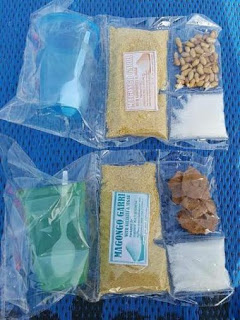
Magongo Garri, Packaged With Kuli-Kuli And Groundnut


When I look at a crazy idea, I get quite impressed in the creativity of the inventor and not necessarily on the relevance of his/her product.
What I would like Nigerians do is to try and support Magongo's idea. There are definitely some flaws in the product, but we could help him/her make it better.
God Bless Nigeria. 

Wednesday, 3 February 2016

What Is Wrong With NEPA?


I was having a good day until my mum entered my room this morning and dropped our January electricity bill on my table and I went sour and wild.
They say Nigeria does not produce enough power to satisfy her populace - which is something we should not even be hearing in the first place - hence they have resorted to a rationing method of disbursing the rare commodity and Nigerians have not been raising placards or anything of that sort. We are a happy people you know...
Whenever a pole gets felled by a natural disaster, the affected neighbourhood gets to fix it. There's no transformer in a community or the existing one gets damaged, members of such community will have to levy themselves to secure one of their choice, according to the strength of their 'contribution' as though distribution companies were less concerned about the quality of their distribution.
What then puts peppered finger in my eye is the superfluously outrageous bills that accompany this epileptic power supply. In my place, the rationing we get is in 48hrs interval, which means you're supposed to see your bulb glow in two weeks for a month. What's more? You'd be lucky to get supplied for 24hrs during your active supposed 48hrs which means on the average, you get to see electricity in less than a week for a month and some human beings will then bill you 5k!
Fellow Nigerians, if we cannot come out and say NO to this injustice, we then are not ready for a change and the labours of our heroes past would be in vain.
Forget about the explanations and excuses. The technology involved in generating electricity is not new. We're not reinventing the wheel for Christ's sake!
In South Africa, they produce about 40,000 megawatts of electricity and the bulk of it comes from coal fired stations (bringing Enugu State to mind) and supplying Swaziland, Botswana, Namibia, Mozambique & Zimbabwe whereas the Giants of Africa cannot boast of 4 megawatts!
These generators we import and keep importing do not help. There are so many businesses most of us venture into that is detrimental to the common good of Nigerians. Generator importers should start thinking of something else, it would be better for them and for everyone that they bring their resources together and build a power plant. They surely would earn more in the long run and be blessed beyond their graves.
Of the many reports I've gotten from interviews, our low income earners have demonstrated willingness to pay even 10,000 naira monthly on electricity. "As far as we can see light steady, we are ready to pay any amount" they say.
Let's help ourselves.
God bless Nigeria. 

Friday, 14 August 2015

Massive Graduate Employment At Jabosca International


Jabosca International, a multi-billion dollar company spread across all continents and located in over 52 countries plans on establishing its regional base in West Africa with Nigeria to serve as its regional headquarter, requires the services of qualified hardworking Nigerian graduates in diverse disciplines to fill the following positions…..
Hold it right there and try not to hiss or close this page for this is not a job advert, it just resembles one of those many things that millions of Nigerian unemployed graduates are ceaselessly hoping and praying for. Some have been at it for years, others for months, others for weeks – like myself -  while for some, they’re just starting; this post might even be their first attempt.

In any case, from my resume above, I appear not to be adequately experienced in the ‘hustling game’ to be talking to the pro’s, but something struck me like an epiphany and I felt that necessity to share.
In those days, (speaking about the mid 70’s) we hear stories of how securing a job in our dear nation was more of ‘posting’ than ‘application’. That is to say after your youth service, you don’t just get to collect your discharge certificate alone but with your appointment letter as well asking you to report to duty with immediate effect. The story is all different now……why?
Dealing with the negative trend or x-raying the ambiguity associated with securing a job is not my priority here but showing you the right boat you need to surf the current tide in is.
You may think or say you do not have a job. I say you’re wrong; you already have a job! Yes, you already have a job only that you did not receive an appointment letter to get it or a monthly pay check assurance. You’re busy searching the tree and neglecting the bird in your hands! Let me elucidate…
After applying for over twenty jobs online, the first response I ever got was a scam, thanks to nairaland for the enlightenment, and this led me to hard thinking; I longed to receive an appointment letter with a sizeable monthly pay check attached, wanted to live in my own house, drive my own car, get married pretty soon…..all these and many more were responsible for sending me to overdrive on the job hunt until I finally realized that I was wasting my time.
I had some skills/talents idling away which were worth billions and I was busy searching for jobs online, jobs that may not even be existing (scams if I may put it that way), jobs that even if I did get might make me feel worse, jobs that required the services of only the experienced/experts in my field. The issue I was now having was converting these skills into its monetary equivalent which I think is your problem too.

Think about it, were you created as an empty vessel with the ability to do nothing? If you’re not catching my drift let me give you a clue. Pick up your CV and go to the hobbies section and bingo! There you have some of it…Yes your hobby…. that is if they’re truly yours.

Those things you have a natural liking for are more or less your ‘appointment letter bearers’. The beautiful part of these hobbies is that we experience intense joy and happiness anytime we do them. Remember that jobs are not all about the amount of money we are been paid to do them, but the comfort and happiness, that sense of contribution we derive while doing them is what really matters.
How can you enjoy cooking and be applying for a banking job? You know how to make hair but submit countless CV’s in marketing firms. Because an ostrich and a dove are both birds doesn’t entail that they can both fly. Look for a credible and experienced counselor/friend to enlighten you on how to channel your skills and talents into a means of livelihood and see the impact it will have in your life. Yes, enough time has been wasted, but enough of the hurry.
I’m in no way implying that you stop applying for jobs, pls do, for myself is still on the lookout, but focus more on improving these skills/talents of yours which can tremendously fast track your hunt or evolve into a cool business. Think about the time you’ve spent surfing the web for a job opening and the money you spent moving from office to office with your brown file. If you had invested these on yourself, where would you have been by now? Once your skill has been harnessed maximally, it sends out a message and before you know it, you will be sought after.
For our upcoming generation, the root cause of this bedeviling phenomenon ought to be curbed from the roots, which I place some of the blame on the guidance and counseling unit department in our secondary schools. These counselors are meant to be expert career guides who are supposed to aid students in linking their skills/abilities to suit their career pursuit, but no; this sensitive duty is being left in the hands of the inexperienced students to make themselves or by some unenlightened parent. Some students spend six years in school and cannot tell you the meaning or significance of G&C.
Next is our tertiary institutions where a medicine candidate seeking admission is transferred to chemistry department, or someone seeking architecture is made to study fishery…destiny manipulators…. In some cases, candidates thwart their own destinies themselves by applying for less competitive courses all in the bid for securing admission, “na the kpali matter” they say to themselves or by others to them.
Let the guidance and counseling units in our schools be revived, and let our tertiary institutions respect the choices of candidates seeking admission. Changing departments for candidates in the name of ‘helping them’ is not the best of decisions. Let our talents be harnessed in every ramification of our lives and let us witness a tremendous improvement in productivity and decline in redundancy in our nation. God bless Nigeria.

Translate

Popular Posts